MEDIAL | The Benefits of Using Closed Captions with MEDIAL
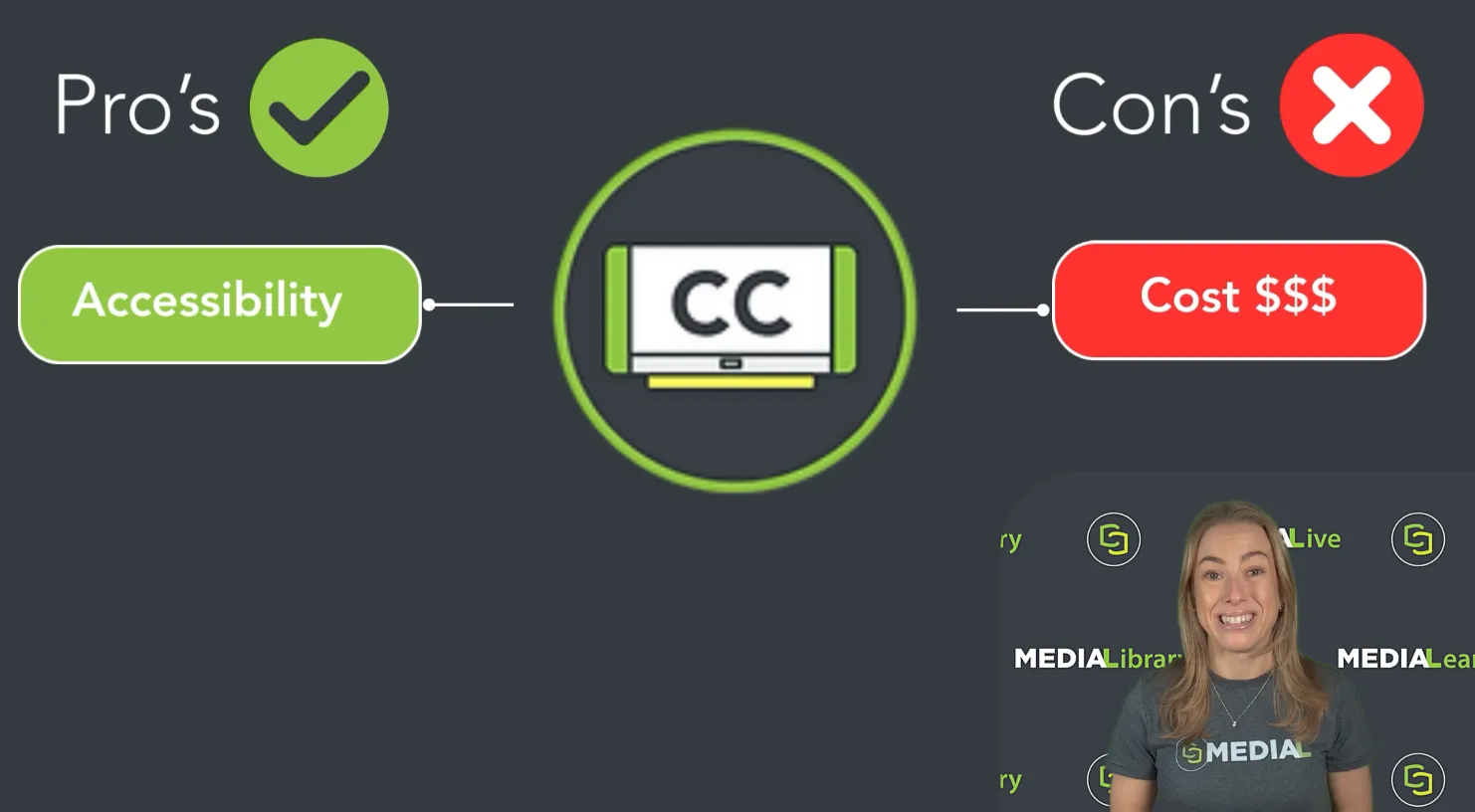
Closed captions have always been about one thing first: accessibility. When people cannot hear the audio clearly, captions help them follow along. When people speak different languages or prefer reading, captions help them stay engaged. And when content needs to be usable in real-world environments like noisy rooms or silent offices, captions make it practical.
But there is a second, less visible challenge that has historically slowed captions down: cost. Captioning was often expensive, and that expense was usually outside the control of the platform providing the video. The cost then gets passed along when captions are deployed, and that can make businesses hesitate.
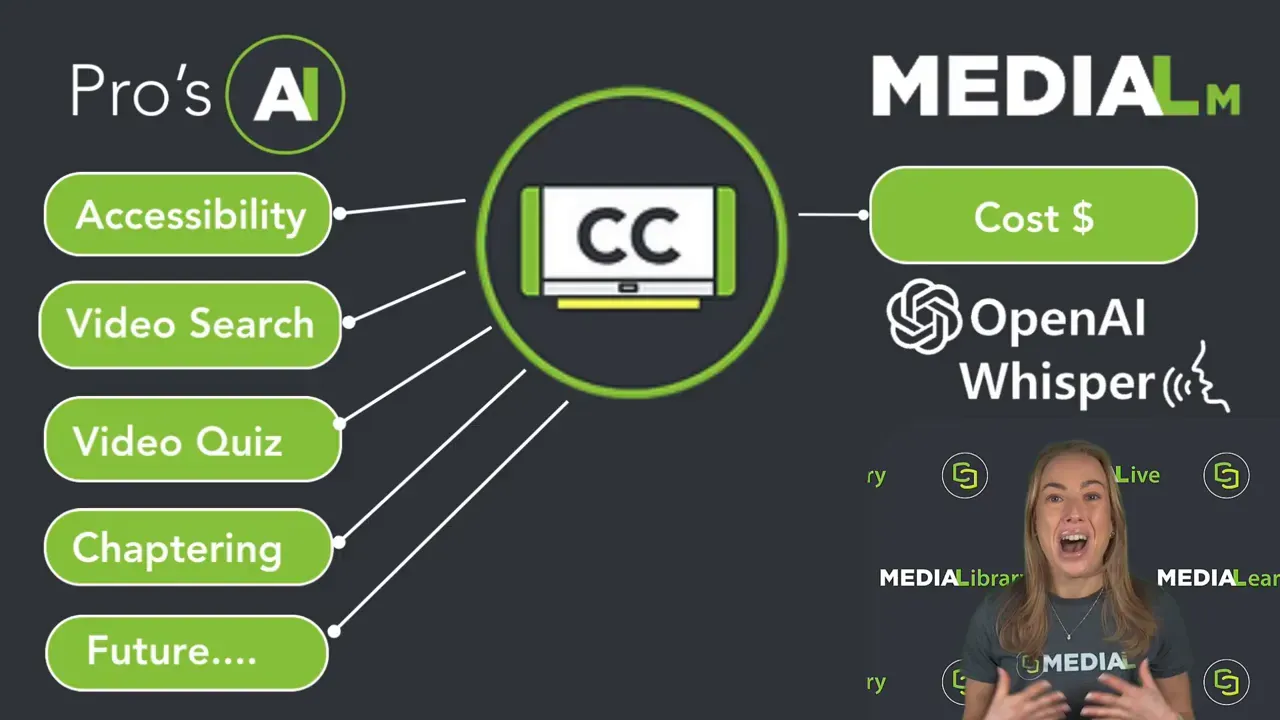
With MEDIAL v9, that balance changes. You still get the same accessibility benefits, but captions now also unlock a set of AI-driven features. At the same time, the cost of captioning drops significantly through an AI-based speech to text approach.

Accessibility has always been the point
Let’s be honest: customers do not ask for captions because it sounds nice. They ask because captions work. They improve comprehension, reduce barriers, and make video content more inclusive.
Historically, the core question was not whether captions were valuable. It was whether captions were financially feasible. That is the hurdle many teams faced when trying to support accessibility at scale.
What changes with MEDIAL v9
In MEDIAL v9, captions remain a foundation for accessibility, but they also become a powerful input for AI features. Closed captions matter even more because they enable functionality that goes beyond simply displaying text on screen.
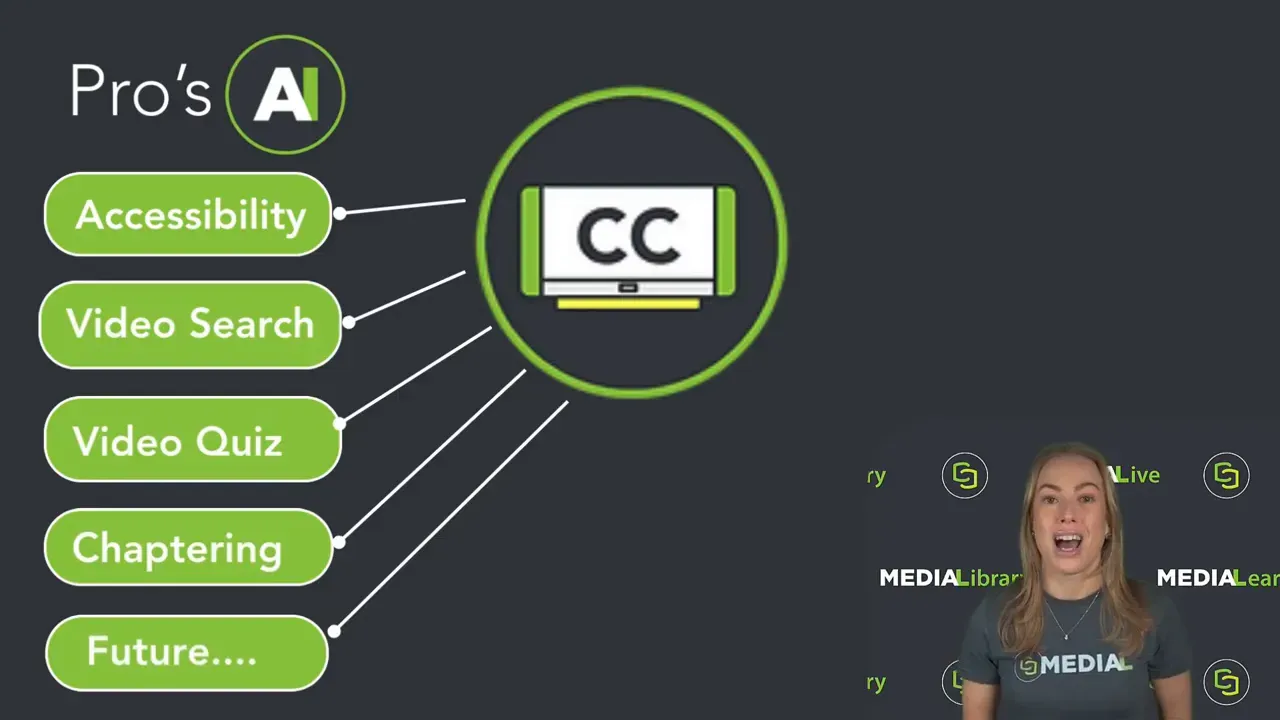
Once captions are available, a whole set of capabilities becomes possible, including:
powered by caption text
experiences that use spoken content structure
that can be built from captioned material
to improve navigation
so users can find relevant videos faster
These features all rely on closed captions. The captions are what turn raw audio into searchable, structured information. That is why captions become more than a compliance checkbox. They become an engagement and learning tool.
Why captions are often expensive, and why that matters
For many organizations, the decision to add captions is shaped by the cost and the operational burden. In many workflows, captioning depends on third-party services, which can introduce:
Higher per-video or per-minute pricing
Less flexibility around timing and volume
Unpredictable total costs as libraries grow
When caption costs are outside a platform provider’s direct control, those costs can end up passed on to customers. And if the pricing model is not favorable, captioning can become difficult to scale.
MEDIAL reduces captioning costs with AI speech to text
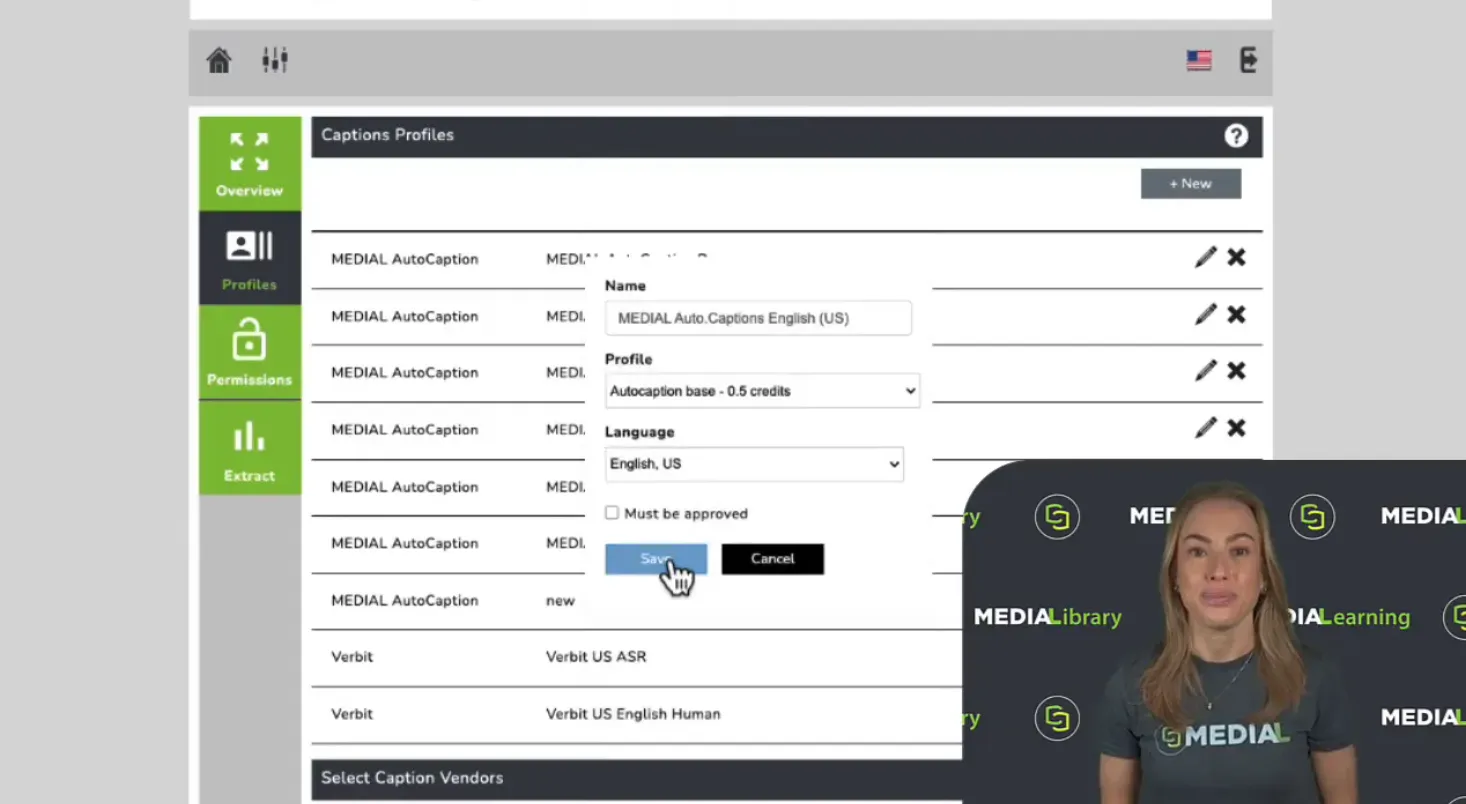
The big shift with MEDIAL v9 is how captions are generated. Instead of relying solely on third-party services, MEDIAL uses an AI-based speech to text model to generate captions.
This accomplishes two practical goals:
as captioning costs come down significantly
that depend on closed captions
So the tradeoff changes. Captions are still about accessibility, but now they are also positioned as a driver of functionality and value. The result is a system where there are far more pros and far fewer cons of captioning with MEDIAL.
Human captioning is still an option
Not every team needs the same level of caption accuracy or workflow. Some organizations prefer human captioning for strict requirements or specialized content.
That is why MEDIAL does not remove the human option. Customers who still prefer human captioning can continue to use it alongside or in place of auto captioning, depending on their needs.
This flexibility matters. You can choose the approach that best fits your audience, content type, and internal policies.
Closed captions as a growth and engagement strategy
Accessibility is the foundation. But when captions are integrated into the platform experience, the impact expands.
Consider what caption-driven capabilities enable:
because people can follow along even when they cannot rely on audio.
through quizzes and chaptering that turn a passive video into an interactive experience.
with automatic chaptering and structured content segments.
through improved content discovery and in-video search that helps users locate specific moments.
In other words, captions help people consume content, but they also help platforms understand content. That is what makes them a strategic investment.
FAQ
Do closed captions still matter for accessibility in MEDIAL v9?
Yes. MEDIAL v9 continues to deliver the same accessibility benefit of closed captions while adding additional AI-driven features that rely on caption text.
What new AI-driven features become possible with captions?
With closed captions available, MEDIAL can enable in-video search, AI generated video experiences, quizzes, automatic chaptering, and improved content discovery.
How does MEDIAL v9 reduce the cost of captioning?
MEDIAL v9 uses an AI-based speech to text model to generate captions, which significantly reduces captioning costs compared to relying solely on third-party services.
Can I still use human captioning with MEDIAL?
Yes. If you prefer human captioning, that option remains available.
Are captions required for all the AI features?
Yes. The AI-driven features mentioned, such as search, quizzes, and chaptering, rely on closed captions to work properly.
Bottom line
Closed captions are still one of the most direct ways to improve accessibility. What MEDIAL v9 changes is the economics and the opportunity. Captions become more affordable through AI speech to text, and they become more valuable because they unlock AI-driven capabilities like search, quizzes, automatic chaptering, and better content discovery.
If captions have felt like a cost problem, MEDIAL v9 is designed to turn them into a platform advantage. Accessibility stays non-negotiable, and the rest of the upside gets bigger.