MEDIAL | Captioning Laws You Should Know
Why captioning matters now
Accessibility rules affecting video content are no longer a distant threat. Two frameworks are driving most of the change: the European Accessibility Act in Europe and the Americans with Disabilities Act (ADA) in the United States. Both introduce clear expectations for digital video accessibility and both include compliance deadlines that are either already in force or very close.

What these laws require in plain language
At a practical level, compliance usually boils down to three things:
that accurately capture spoken words and meaningful sounds
that provide a text version of audio content
so captions match the timing of speech and are easy to read
Enforcement can happen in different ways. In the United States, the Department of Justice and other federal agencies can act, and individuals can file complaints. In Europe, enforcement is managed by each member country, so details and penalties vary. Failure to comply can lead to fines, legal action, or formal complaints.
European Accessibility Act: what to know
The European Accessibility Act applies broadly to organizations that provide digital content, including video. The law is focused on bringing digital services up to a minimum accessibility standard across the EU.
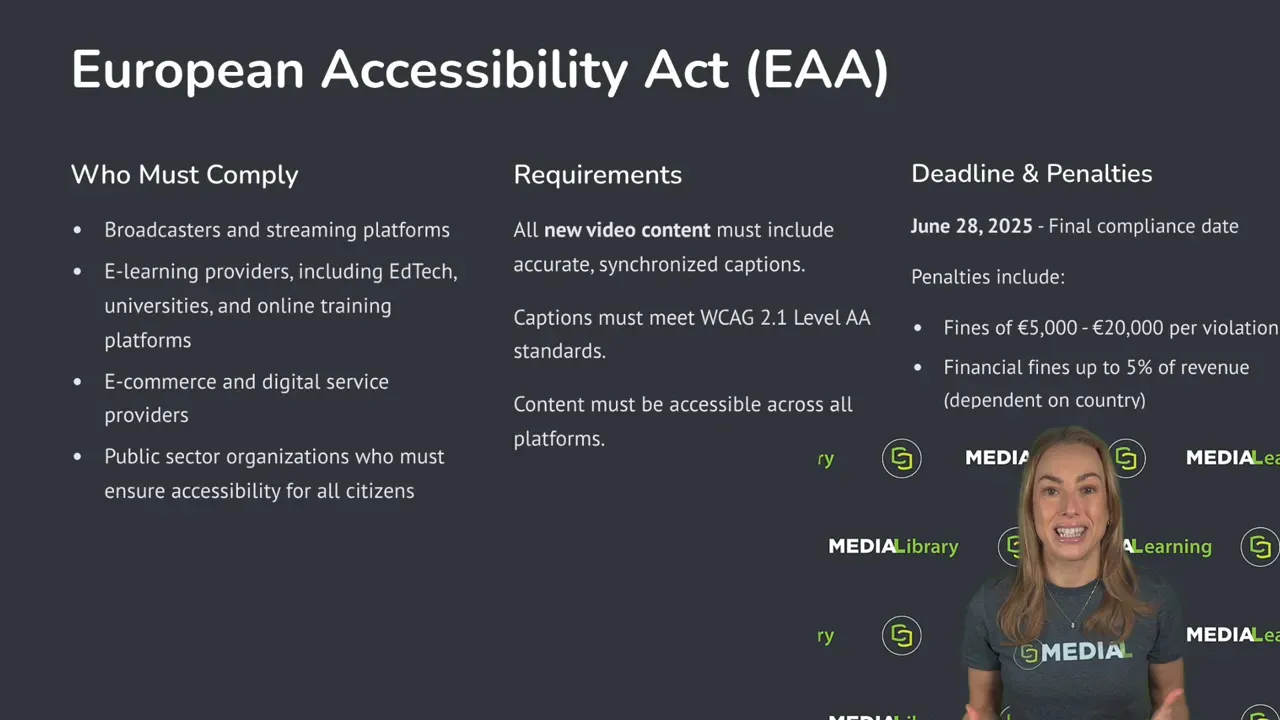
Key point for Europe: new video content published after the main deadline must be accessible, which generally means including closed captions and a usable transcript. Enforcement is handled at the country level so some operational details and fines will differ between member states. Penalties commonly range from a few thousand up to tens of thousands of euros depending on the country and the severity of non compliance.
ADA in the United States: core expectations
The ADA does not have a single captioning rule that looks the same for every organization. Instead, requirements depend on context, the type of organization, and how content is used. In practice, however, video content that is publicly available or used in customer facing services is expected to be accessible.
A useful starting place for organizations unsure about applicability is ADA.gov. In most situations, providing closed captions, a transcript, and ensuring captions are accurate and synchronized will meet expectations and significantly reduce risk.
Quality matters: what good captioning looks like
Complying is not only about adding a caption file. The details matter. Good captioning should be:
— spoken words, names, and technical terms should be transcribed correctly
— captions should appear when words are spoken and disappear when speech ends
— font size, color contrast, and line length should support easy reading
— captions and transcripts must be discoverable and easy to enable
For media with important non spoken audio like alarms, music cues, or speaker identification, captions should include short descriptions so users receive the same context as hearing users.
Which videos need captions
Rules differ between jurisdictions, but a simple, futureproof approach works well across the board:
published after regulatory deadlines
even if it was published before the deadline
Audit legacy catalogs
and prioritize captioning high traffic and customer facing items first
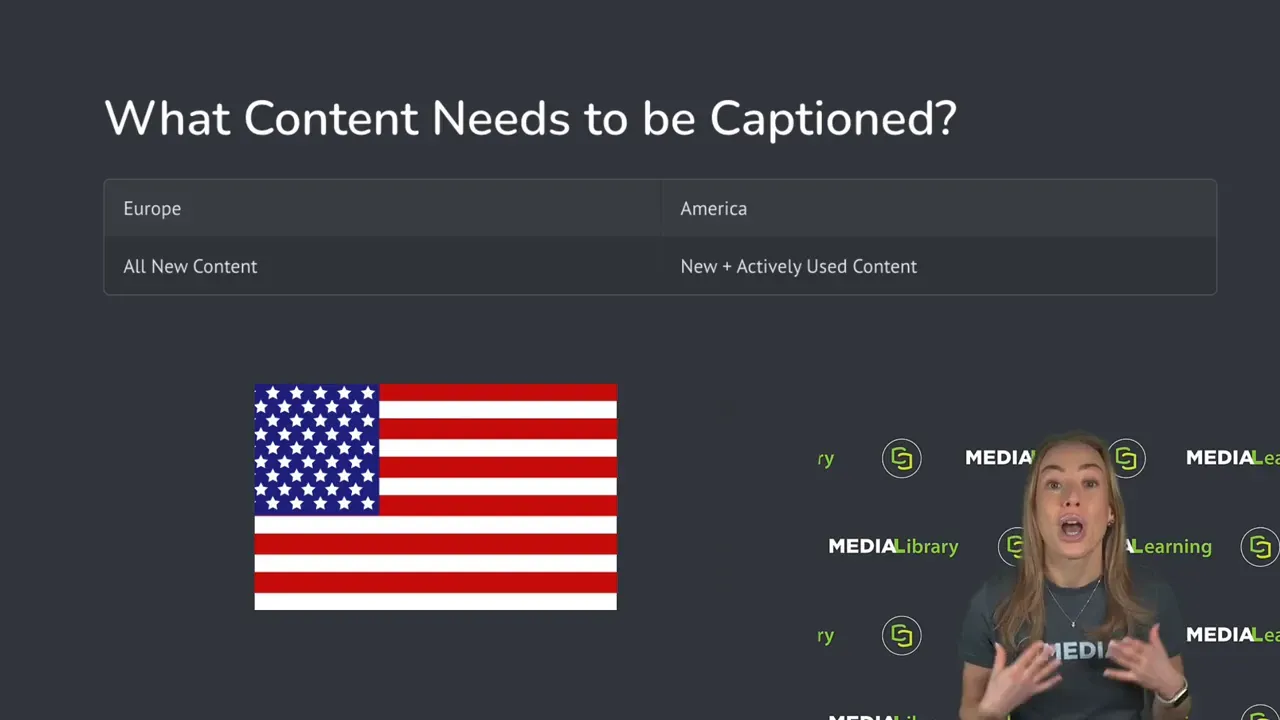
In Europe the emphasis is mainly on new content published after the main deadline. In the United States regulators focus more on where content is actively being used. That means older content may still need captions if people continue to access it.
Practical steps to get compliant quickly
Many organizations can get a long way toward compliance with a straightforward checklist:
Run an inventory of all video content and tag items as new, archived, or actively used
Prioritize captioning for customer facing, high traffic, and legally sensitive content
Choose a captioning workflow that supports human review for accuracy rather than relying on raw auto captions
Publish transcripts alongside each video and make them discoverable in the content player or page
Test captions on multiple devices to ensure readability and synchronization
Document your processes and retain records showing reasonable steps toward accessibility
Cost and timeline considerations
Costs vary by volume, language, and quality requirements. Machine generated captions are inexpensive and quick but often require human correction to meet accuracy standards. For organizations with large catalogs, batching caption work and using a mixed approach can balance speed and quality.
Start with high impact content, then scale captioning efforts across the catalog. Keep records of timelines and corrections to demonstrate good faith efforts if questions arise.
Risk management and legal advice
This is a general overview and not legal advice. Organizations should consult legal counsel familiar with their industry and jurisdictions to confirm specific obligations and potential liabilities. Accessibility is also a business opportunity. Making content accessible expands reach and improves user experience for everyone.
Checklist: quick compliance playbook
before publication
on a prioritized schedule
alongside video files and players
Ensure captions are accurate and synchronized
of your workflows and remediation actions
FAQ
Do closed captions and transcripts meet accessibility requirements?
In most cases yes. Closed captions and transcripts are core requirements under both the European Accessibility Act and ADA related guidance. Captions must be accurate, synchronized, and readable. Transcripts are useful for searchability and for users who prefer reading.
Which law should my organization follow if it operates in both the US and Europe?
Follow the rules that apply to where you publish and serve users. For operations in both regions, adopt a compliance approach that satisfies the stricter elements of each framework. Prioritize captioning for new and actively used content across all markets.
Are auto generated captions enough?
Auto generated captions are a useful starting point but often need human review to be legally defensible and user friendly. Accuracy, timing, and correct speaker identification are common issues that require correction.
What happens if I do not comply?
Non compliance can lead to fines, formal complaints, or legal action. Enforcement mechanisms vary by country and by agency. Addressing accessibility proactively reduces legal risk and improves audience reach.
Where can I find more guidance?
For the United States start with ADA.gov. For Europe check guidance from national accessibility authorities and the European Commission. Consult legal counsel for obligations specific to your organization.
Final thought
Accessibility is now a legal and practical requirement for digital video in both Europe and the United States. Closed captions and transcripts are central to compliance. The safest, most future proof approach is to caption all new content and any content that remains in active use. Acting now reduces risk and makes content available to a wider audience.